Laparoscopic management of liver abscesses and hydatid cysts represents an advanced minimally invasive approach to treating complex, localized space-occupying infections and parasitic lesions within the liver. It provides a targeted surgical alternative to open laparotomy or repeated percutaneous punctures, ensuring thorough drainage and safe removal without spilling infectious or parasitic contents.
Key Points
-
Distinct Pathologies:
-
Liver Abscess: A localized collection of pus within the liver caused by bacterial (pyogenic) or parasitic (amebic) infections.
-
Hydatid Cyst: A fluid-filled parasitic cyst caused by the larval stage of the Echinococcus tapeworm, transmitted through contaminated food, water, or contact with infected animals.
-
-
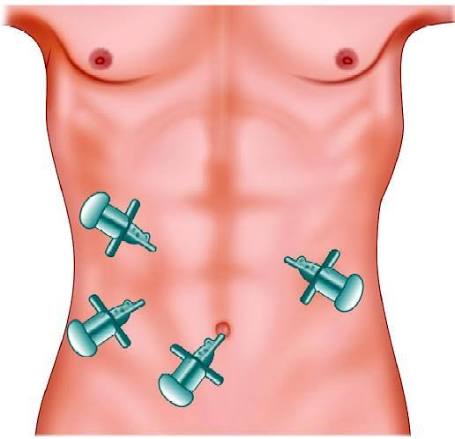
Minimally Invasive Approach: Performed using 3 to 4 small abdominal keyhole incisions, a high-definition laparoscope, and specialized laparoscopic instruments to access the liver surface safely.
-
Laparoscopic Drainage and Debridement (Abscess): For large, multiloculated, or antibiotic-resistant liver abscesses, laparoscopy allows the surgeon to break down internal pus chambers, completely evacuate thick purulent material, and wash out the cavity under direct vision.
-
Scolicidal Agents and Cyst Sterilization (Hydatid): When treating hydatid cysts, the surgical field is carefully isolated using packs soaked in scolicidal solutions (such as hypertonic saline or cetrimide) to kill the parasite and prevent anaphylactic shock or secondary seeding if cyst fluid spills.
-
Cyst Deroofing and Partial Resection (Capitonnage): The prominent dome of the hydatid cyst is unroofed, the remaining fluid and laminated membrane are completely extracted, and the residual cavity is thoroughly irrigated and managed.
-
Intraoperative Ultrasound Guidance: Laparoscopic ultrasound probes are frequently used during the procedure to precisely locate deep-seated lesions, map out nearby major blood vessels, and guide safe entry.
-
Reduced Postoperative Pain: Avoiding a large, painful subcostal open incision significantly reduces postoperative discomfort, lowers reliance on strong pain medications, and promotes early mobility.
-
Shorter Hospital Stay: Patients typically experience a quicker recovery of liver function and overall vitality, leading to reduced hospital stays compared to open surgical management.
-
General Anesthesia and Duration: The procedure is conducted under general anesthesia and typically takes between 60 to 120 minutes, depending on the complexity, size, and exact location of the lesions within the liver lobes.
-
Complementary Medical Therapy: Surgical intervention is combined with targeted medical management—such as prolonged courses of antibiotics for pyogenic abscesses or anti-helminthic medications (like albendazole) for hydatid cysts—to ensure complete eradication and prevent recurrence.