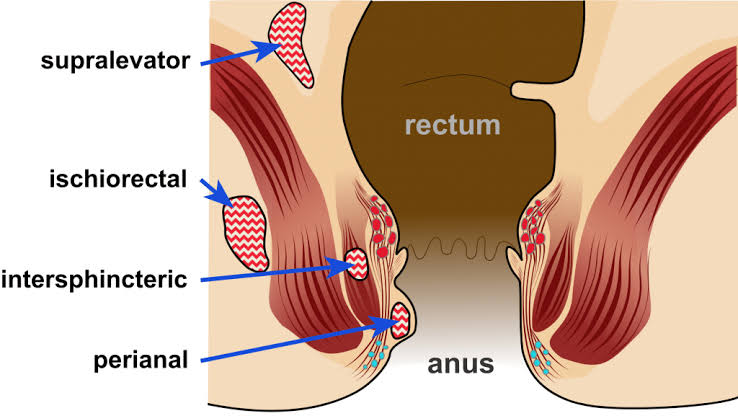
Management of perianal and other localized abscesses involves prompt surgical drainage and comprehensive wound care to eliminate infection, relieve severe throbbing pain, and prevent the formation of chronic complications like fistulas. An abscess is a painful, pus-filled cavity caused by a bacterial infection in the tissues surrounding the anus and rectum.
Key Points
-
Primary Cause: Perianal abscesses typically originate when tiny anal glands become blocked, allowing bacteria to multiply and form a localized pocket of infection beneath the skin or deeper in the tissue spaces around the anal canal.
-
Surgical Urgency: Incision and drainage is the gold standard and immediate treatment for any abscess; waiting or relying solely on antibiotics is ineffective because medications cannot adequately penetrate the closed, walled-off cavity of pus.
-
Incision and Drainage (I&D): The procedure involves making a careful incision directly over the fluctuating swelling to evacuate trapped pus, followed by thorough irrigation of the cavity with sterile saline.
-
Anesthesia Options: Depending on the depth and size of the abscess, the procedure can be performed under local anesthesia in an outpatient clinic, or under short regional/general anesthesia in an operating room for deeper, more complex collections (such as ischiorectal or intersphincteric abscesses).
-
Packing and Drainage Tubes: For larger or deep-seated abscesses, the cavity may be loosely packed with sterile gauze or fitted with a small rubber drain to keep the wound open, allowing continuous drainage of remaining fluid and preventing the surface from healing prematurely.
-
Connection to Anal Fistulas: Up to 50% of perianal abscesses eventually develop into a chronic anal fistula (an abnormal tunnel connecting the anal canal to the skin) once the acute infection subsides, requiring secondary evaluation or management.
-
Antibiotic Therapy: While drainage is the primary cure, targeted oral or intravenous antibiotics are prescribed concurrently if the patient has systemic signs of infection (fever), a compromised immune system, or surrounding spreading cellulitis.
-
Pain Relief and Wound Care: Post-procedural comfort is managed with pain relievers, warm sitz baths several times a day to reduce swelling and promote natural drainage, and regular dressing changes.
-
Rapid Symptom Relief: Patients experience immediate and dramatic pain relief the moment the built-up pressure and trapped pus are released during surgery.
-
Complete Healing Timeline: Smaller superficial abscesses typically heal completely within 1 to 3 weeks, whereas deeper or more complex surgical wounds may require extended specialized wound care and follow-up.